
Pressure washing can make a dirty driveway, patio, or sidewalk look dramatically cleaner. However, many homeowners finish a do-it-yourself cleaning project only to discover that the concrete looks striped, blotchy, streaked, or lighter in some places than others.
Uneven results usually happen because different sections of the concrete received different amounts of water pressure, cleaning solution, or cleaning time. In some cases, the surface is simply drying unevenly. In others, the pressure washer may have removed dirt inconsistently—or permanently altered the top layer of the concrete.
Understanding what caused the uneven appearance can help you determine whether the surface needs another cleaning, additional drying time, stain treatment, or professional evaluation.
Is the Concrete Actually Uneven, or Is It Still Drying?
Before assuming something went wrong, allow the concrete to dry completely.
Concrete is porous and absorbs moisture. Areas that received more water may remain darker longer than surrounding sections. Shaded areas, low spots, joints, cracks, and sections with limited airflow can also dry more slowly.
Depending on the weather and the amount of water used, complete drying may take several hours or longer. Humidity, shade, temperature, and drainage all affect the process.
Wait until the entire area is dry before evaluating the final result. If the dark or light patches disappear after drying, the uneven appearance was probably temporary.
If stripes, lines, pale patches, or swirls remain after the surface has dried, the issue may be related to the cleaning technique or the condition of the concrete.
Common Reasons Concrete Looks Uneven After Pressure Washing
Several factors can cause an inconsistent finish. Some are easy to correct, while others may indicate surface damage.
- The Wand Was Held at Different Distances
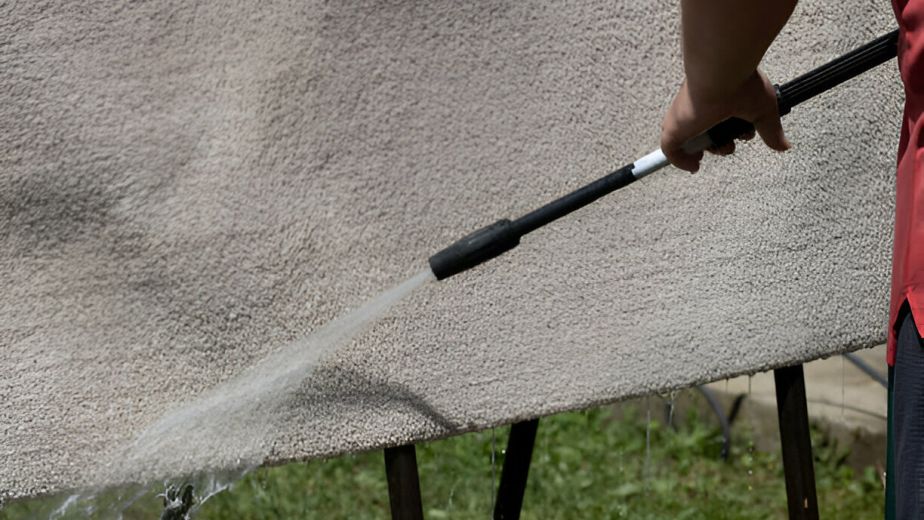
Water pressure becomes more concentrated when the nozzle is held close to the surface. Moving the wand farther away reduces the cleaning force.
During a DIY project, it is easy to move the wand closer when addressing a dark spot and farther away while cleaning less-stained areas. This means some sections receive aggressive cleaning while others receive only a light rinse.
The result may include:
- Light and dark patches
- Narrow clean lines
- Wand-shaped marks
- Uneven stain removal
- Areas that look noticeably brighter than others
Maintaining a consistent distance is essential. The correct distance depends on the machine, nozzle, concrete condition, and type of contamination.
- The Cleaning Passes Did Not Overlap Evenly
Pressure washing concrete with a wand requires controlled, overlapping passes.
When each pass does not slightly overlap the previous one, narrow strips of dirt may remain between cleaned areas. Overlapping too heavily can cause other sections to be cleaned more aggressively.
This creates the striped appearance sometimes called zebra striping.
These marks are especially noticeable on large, flat surfaces such as:
- Driveways
- Sidewalks
- Patios
- Pool decks
- Commercial walkways
- Parking areas
Trying to remove stripes by spraying individual lines at close range can make the problem worse.
- The Wand Moved at an Inconsistent Speed
Moving slowly gives the water more time to clean one section. Moving quickly provides less cleaning time.
If you slow down over darker stains but move rapidly across cleaner sections, the finished concrete may look patchy. The slower passes may appear brighter because more surface buildup was removed.
Consistent movement is as important as maintaining a consistent nozzle distance.
Professional cleaners often use surface-cleaning equipment on large concrete areas because it distributes the cleaning action more evenly than a handheld wand.
- The Nozzle Was Too Narrow or Aggressive
Pressure washer nozzles control the angle and concentration of the water stream. A narrow spray pattern concentrates the force into a smaller area.
Using an overly aggressive nozzle can leave visible lines or remove the surface layer of the concrete. A zero-degree nozzle is particularly concentrated and should not be used casually on concrete.
Possible signs of overly concentrated pressure include:
- White lines
- Deep wand marks
- Rough patches
- Exposed aggregate
- Surface pitting
- Permanent changes in texture
- Lines that remain after repeated rinsing
More pressure does not always create a better result. Cleaning should remove contamination without unnecessarily damaging the underlying material.
- Too Much Pressure Was Used
Concrete is durable, but it is not indestructible.
High pressure can remove part of the cement paste at the surface, especially on newer, older, weakened, decorative, or previously damaged concrete. This is known as etching.
Etched concrete may look:
- Lighter than surrounding areas
- Rough or sandy
- Streaked
- Pitted
- Permanently discoloured
- More textured in certain sections
Unlike leftover dirt, etching cannot be rinsed away. The material itself has been altered.
New concrete may be especially vulnerable because it needs adequate curing time before aggressive cleaning. Decorative concrete, coloured surfaces, and concrete with coatings or sealers also require extra care.
- The Pressure Washer Removed Dirt Unevenly
A heavily soiled driveway may contain layers of dirt, algae, vehicle residue, mildew, and atmospheric buildup.
If the cleaning process removes all the buildup from one area but only part of it from another, the exposed concrete will appear different in colour.
This is common when homeowners attempt to clean large surfaces using only water. Water pressure may remove loose dirt but struggle with bonded organic growth, oil, grease, rust, or other contaminants.
An appropriate pre-treatment can help loosen buildup before pressure is applied. Without it, the operator may compensate by moving the nozzle closer, increasing the risk of visible cleaning marks.
- Cleaning Solution Was Applied Unevenly
Cleaning solutions can help break down organic growth and other surface contaminants. However, they must be applied evenly and used according to the surface and stain type.
Uneven application may cause some areas to clean more effectively than others. Allowing the product to dry on the concrete may also leave residue or discolouration.
Problems can occur when:
- Some sections receive more solution than others
- The product is applied in direct sunlight
- The surface dries before rinsing
- The solution is too strong
- The product is not suitable for concrete
- The dwell time varies significantly
- The final rinse is incomplete
Always follow the product instructions and protect surrounding landscaping, painted surfaces, metals, and drainage areas.
- A Surface Cleaner Was Used Incorrectly
A surface cleaner uses rotating spray bars beneath a circular housing. When used properly, it can create a more consistent finish across driveways, patios, and sidewalks.
However, uneven results can still occur when:
- The machine is moved too quickly
- Passes do not overlap properly
- The spray tips are clogged or worn
- One nozzle is working differently from the other
- The equipment is tilted
- The cleaner is unsuitable for the pressure washer
- The surface receives inconsistent pre-treatment
A malfunctioning or poorly operated surface cleaner can leave rings, spirals, stripes, or patchy sections.
- Different Sections of Concrete Have Different Ages or Finishes
Not all concrete on a property was necessarily poured at the same time.
A driveway may have been repaired, widened, resurfaced, or replaced in sections. Patios and walkways may also contain patches with different mixtures, finishing techniques, curing conditions, or sealers.
Once dirt is removed, these natural differences may become more noticeable.
Variations may be caused by:
- Different concrete batches
- Previous repairs
- Patching compounds
- Different finishing methods
- Uneven curing
- Age differences
- Prior pressure washing
- Different sealers or coatings
Cleaning can reveal these variations, but it does not necessarily cause them.
- Old Sealer or Coating Was Partially Removed
Concrete sealers and coatings can wear unevenly over time. Aggressive pressure washing may remove loose or weakened sections while leaving stronger areas in place.
This can create:
- Cloudy patches
- Glossy and dull sections
- Light and dark colour differences
- Flaking areas
- Irregular lines
- Visible coating boundaries
Trying to correct a coating problem with additional pressure can cause more damage. The surface may need professional stripping, cleaning, resealing, or refinishing.
- Stains Reacted Differently to Cleaning
Concrete stains do not all respond to the same treatment.
A driveway may contain:
- Motor oil
- Transmission fluid
- Rust
- Leaf tannins
- Tire marks
- Algae
- Mold
- Mildew
- Fertilizer stains
- Red clay
- Paint
- Irrigation deposits
General pressure washing may improve ordinary dirt and organic buildup while leaving other stains largely unchanged. This can make the surface look uneven even though it has been cleaned.
Some stains need targeted treatment before or after general cleaning. Deep or long-standing stains may improve without disappearing completely.
- Water Drainage Created New Marks
Dirty water needs somewhere to go. When runoff moves across a cleaned area, it can redeposit soil and residue.
Low spots may collect contaminated water, while edges and joints can trap debris. If the surface is not rinsed methodically, dirty runoff can dry into streaks or patches.
Drainage-related marks are common near:
- Driveway edges
- Expansion joints
- Cracks
- Garage doors
- Curbs
- Steps
- Low sections of patios
- Areas beside mulch or soil
A complete final rinse is needed to move loosened contamination away from the cleaned surface.
Cleaning Marks vs. Concrete Damage
Before trying to fix uneven concrete, determine whether you are seeing remaining contamination or physical surface damage.
Signs the Concrete May Still Be Dirty
The surface may need further cleaning when:
- Dark bands remain between lighter passes
- Algae is still visible
- The surface feels similar across all sections
- The marks follow missed cleaning paths
- Dirt transfers when rubbed
- The patches improve with proper spot treatment
- The colour difference appears related to stains
Signs the Concrete May Be Etched
The concrete may have been damaged when:
- Light lines exactly follow the wand movement
- The surface feels rougher in marked areas
- Aggregate is more exposed
- The marks remain after the surface dries
- Additional rinsing makes no difference
- The colour has been removed rather than dirt
- Pitting or grooves are visible
When etching is suspected, stop pressure washing. Repeatedly cleaning the marks can deepen the damage.
Can Uneven Pressure-Washing Marks Be Fixed?
The solution depends on the cause.
If the Concrete Is Still Wet
Allow it to dry completely before taking further action. Do not keep pressure washing simply because wet sections look darker.
If Dirt Was Removed Unevenly
A complete and controlled re-cleaning may improve the appearance. The entire section should be treated consistently rather than chasing individual lines with the wand.
A professional may use:
- Appropriate pre-treatment
- A properly sized surface cleaner
- Consistent overlapping passes
- Controlled pressure
- Targeted stain treatments
- A thorough final rinse
Cleaning the whole slab or clearly defined section usually produces a more uniform result than touching up isolated stripes.
If Cleaning-Solution Residue Remains
The surface may need a complete rinse, provided the product is safe and the manufacturer’s instructions are followed.
Do not add more chemicals without identifying the existing product and determining whether the combination is safe.
If the Concrete Was Etched
Pressure washing cannot restore material that has already been removed.
Possible corrective options may include:
- Professional resurfacing
- Concrete refinishing
- Grinding
- Applying an appropriate coating
- Staining or sealing
- Replacing severely damaged sections
The right solution depends on the depth and extent of the damage. A concrete restoration contractor may be needed for significant etching.
Should You Pressure Wash the Concrete Again?
Do not immediately repeat the same process.
A second attempt can help when the problem is inconsistent dirt removal, but it can worsen the situation when the surface has already been etched.
Before cleaning again, consider:
- Is the concrete completely dry?
- Are the uneven areas dirty or physically rough?
- Were narrow lines created by the wand?
- Was an aggressive nozzle used?
- Is the surface sealed, coated, coloured, or decorative?
- Are stains still present?
- Is the concrete new or deteriorating?
- Does the area contain repairs or patches?
When you are uncertain, professional evaluation is safer than experimenting with more pressure.
How Professionals Create a More Even Finish
Professional concrete cleaning is not based on pressure alone. It involves selecting a process appropriate for the surface and contamination.
A typical process may include:
Inspecting the Surface
The technician looks for cracks, patches, coatings, drainage problems, stains, damaged areas, and signs of prior etching.
Identifying the Contamination
Dirt, algae, grease, rust, oil, and paint require different approaches. Identifying the problem helps determine whether pre-treatment is needed.
Testing a Small Area
A test section helps confirm that the planned method can clean the surface without causing unwanted changes.
Applying an Appropriate Treatment
When needed, a suitable cleaning solution is applied evenly and given an appropriate amount of time to work.
Using Consistent Equipment
A surface cleaner can help distribute cleaning action more evenly across large areas. Edges and corners may then be carefully detailed.
Rinsing Methodically
The surface is rinsed in a planned direction so loosened dirt and cleaning residue do not settle back onto cleaned areas.
Reviewing the Finished Surface
After cleaning, the technician checks for missed sections, remaining stains, drainage residue, and areas that need careful additional attention.
How to Reduce the Risk of Uneven DIY Results
Homeowners who choose to pressure wash concrete should take several precautions.
Start With the Least Aggressive Method
Begin with a wider spray pattern and a greater distance from the surface. Increase cleaning action gradually only when necessary.
Test an Inconspicuous Area
A small test can reveal whether the equipment is too aggressive or the cleaning solution affects the concrete unexpectedly.
Maintain a Consistent Distance
Avoid moving the nozzle closer to stubborn stains. Use a suitable stain treatment instead of concentrating excessive pressure on one spot.
Keep the Wand Moving
Holding the spray in one place can cause visible marks or etching.
Use Even, Overlapping Passes
Work in a consistent pattern and overlap each pass slightly to reduce striping.
Clean Defined Sections
Complete one slab or section at a time. Random spot cleaning can create visible colour differences.
Avoid Aggressive Nozzles
Never assume that the narrowest or strongest spray will produce the best result.
Protect Nearby Areas
Be mindful of siding, garage doors, vehicles, plants, windows, electrical fixtures, and neighbouring properties.
Know When to Stop
If the surface becomes lighter, rougher, or visibly marked, stop immediately. Continuing may deepen the damage.
Is Professional Concrete Cleaning Worth It?
Professional service may be worthwhile when:
- The driveway is large
- The concrete has heavy organic buildup
- Oil, rust, or red-clay stains are present
- The surface is decorative or sealed
- Previous DIY cleaning left stripes
- You are preparing the property for sale
- Commercial sidewalks or parking areas need cleaning
- You are unsure which pressure level is safe
- The concrete is older, cracked, or previously repaired
Professional cleaning does not guarantee that every stain will disappear. However, using the correct equipment and process can reduce the risk of avoidable striping, patchiness, and surface damage.
Restore a More Consistent Appearance to Your Concrete
Uneven concrete after DIY pressure washing is often caused by inconsistent nozzle distance, overlapping, movement speed, equipment, or cleaning-solution application. It can also reveal differences in the concrete itself or indicate that excessive pressure etched the surface.
The safest next step depends on whether the uneven areas contain remaining dirt or permanent damage. Avoid repeatedly spraying visible lines at close range. A complete evaluation and controlled cleaning process may provide a more consistent result without making the problem worse.
Curb Appeal Pressure Wash provides driveway, sidewalk, patio, walkway, and commercial concrete-cleaning services for properties in Midlothian, Richmond, Chesterfield County, Henrico County, Mechanicsville, Tuckahoe, and surrounding areas.
Request a Concrete-Cleaning Estimate
Does your driveway or patio look striped, stained, or uneven after a DIY cleaning attempt?
Contact Curb Appeal Pressure Wash to request a free estimate. We can review the condition of the surface, explain realistic cleaning options, and recommend an appropriate approach for your property.