
Yes, pressure washing can damage concrete walkways if too much pressure is used, the nozzle is too aggressive, or the surface is already weakened.
Concrete is durable, but it is not impossible to damage. Incorrect pressure washing can cause etching, visible cleaning lines, surface wear, and problems around cracks or joints.
For homeowners considering Walkway Cleaning Richmond VA, the safest approach is controlled pressure washing based on the condition of the concrete rather than using maximum pressure.
How Can Pressure Washing Damage Concrete?
Pressure washing can cause damage when the equipment is used incorrectly.
Common problems include:
- Surface etching
- Uneven cleaning lines
- Damage around cracks
- Removal of weak surface material
- Rough or patchy appearance
The risk increases when very high pressure is used too close to the surface.
What Is Concrete Etching?
Concrete etching happens when aggressive water pressure removes part of the surface layer.
This can leave:
- Light-colored marks
- Lines
- Uneven texture
- Permanent-looking patterns
Once the surface is etched, cleaning alone usually will not restore the original finish.
Can Pressure Washing Leave Lines on Concrete?
Yes.
Visible lines may appear when:
- The nozzle is held too close
- The wand moves unevenly
- Pressure is too high
- One area receives more cleaning than another
These marks can make the walkway look streaky rather than clean.
Professional walkway cleaning in Richmond, VA should aim for an even appearance.
Can Pressure Washing Damage Cracked Concrete?
Yes.
Existing cracks may be more vulnerable.
High pressure can potentially:
- Worsen loose edges
- Remove weakened material
- Disturb damaged sections
- Expose existing deterioration
A walkway should be inspected before cleaning so damaged areas can be treated carefully.
Is Older Concrete More Likely to Be Damaged?
It can be.
Older concrete may already have:
- Surface wear
- Cracks
- Spalling
- Weak edges
- Previous repairs
These conditions can make aggressive pressure washing riskier.
The cleaning method should be adjusted according to the surface condition.
What About New Concrete?
New concrete also requires care.
Concrete needs time to cure properly before aggressive cleaning methods are used.
If a walkway is relatively new, the installer or concrete professional’s recommendations should be followed before pressure washing.
Is Pressure Washing Safe for Most Concrete Walkways?
Yes, when performed correctly.
Concrete walkways are generally well suited to controlled pressure washing.
A professional cleaner should consider:
- Surface condition
- Age
- Existing cracks
- Type of staining
- Amount of algae
- Appropriate pressure level
The goal is effective cleaning without unnecessary surface wear.
Why Maximum Pressure Is Not Always Better
More pressure does not automatically mean a cleaner walkway.
Too much force can damage the surface while doing little to improve the final result.
A better process may combine:
- Appropriate cleaning solution
- Controlled pressure
- Correct nozzle selection
- Consistent technique
- Thorough rinsing
This can help reduce the need for aggressive pressure.
Can Cleaning Solutions Reduce the Need for High Pressure?
Yes.
Cleaning solutions can help loosen:
- Green algae
- Mildew
- Organic staining
- Dirt
- Surface grime
Once the buildup has been treated, less mechanical force may be needed.
This is especially useful when the walkway has heavy organic growth.
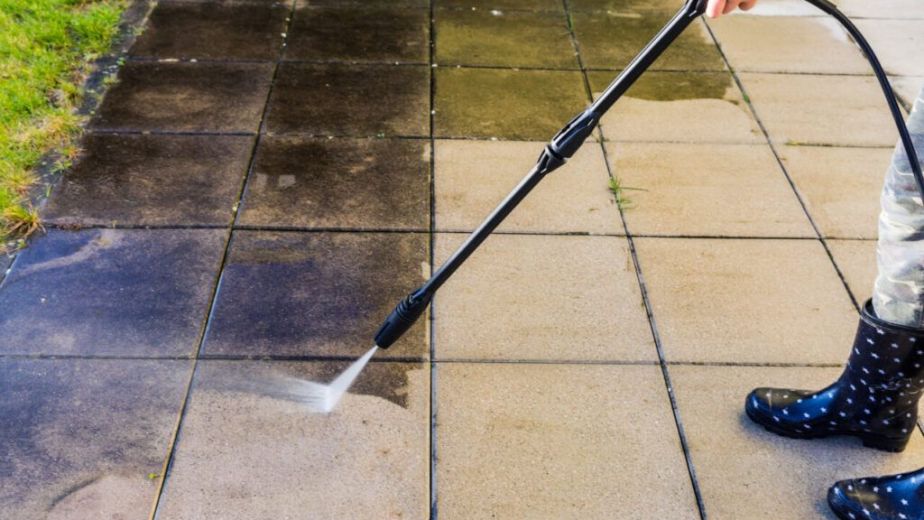
Can Pressure Washing Remove Green Algae from Concrete?
Yes.
Green algae is one of the most common reasons homeowners schedule Walkway Cleaning Richmond VA.
It often develops where concrete stays:
- Damp
- Shaded
- Near trees
- Exposed to sprinklers
- Poorly drained
Controlled pressure washing combined with appropriate treatment can help remove the buildup.
Can Pressure Washing Remove Mold and Mildew?
It can help remove visible mold- and mildew-related buildup.
For organic growth, professional cleaning may use treatment before pressure washing rather than relying on water force alone.
This can improve cleaning while reducing unnecessary pressure.
Can Pressure Washing Remove Black or Dark Walkway Stains?
Sometimes.
Dark staining may be caused by:
- Dirt
- Mildew
- Algae
- Organic debris
- Weather exposure
- Moisture
The cleaning method should be based on the likely cause of the stain.
Simply increasing pressure is not always the solution.
Can Pressure Washing Damage Concrete Joints?
It can.
Extra care should be taken around:
- Expansion joints
- Cracks
- Edges
- Repaired sections
Aggressive pressure may disturb weakened materials around these areas.
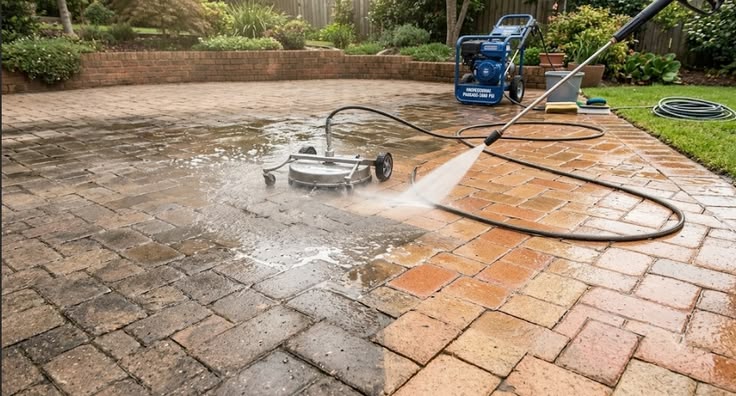
What About Brick or Paver Walkways?
Brick and paver surfaces require different precautions.
Excessive pressure may:
- Remove joint sand
- Disturb loose pavers
- Damage older brick
- Create uneven results
A professional walkway cleaning service should identify the surface material before choosing the cleaning method.
How Close Should a Pressure Washer Be to Concrete?
There is no single distance that is appropriate for every project.
The correct working distance depends on:
- Equipment
- Nozzle type
- Pressure
- Surface condition
- Cleaning objective
Starting farther from the surface and adjusting carefully is generally safer than immediately using aggressive pressure at close range.
Why Professional Walkway Cleaning Can Reduce Damage Risk
Professional cleaning should begin with an assessment of:
- Concrete condition
- Cracks
- Surface wear
- Staining
- Algae
- Drainage
- Accessibility
The cleaner can then select the appropriate combination of treatment, pressure, and technique.
How Often Should Concrete Walkways Be Pressure Washed?
For many Richmond properties, cleaning every 12 to 18 months is a practical starting point.
Some surfaces may need cleaning sooner if they experience:
- Heavy shade
- Frequent moisture
- Green algae
- Mildew
- Heavy foot traffic
- Poor drainage
The walkway should be cleaned based on condition rather than an overly aggressive fixed schedule.
Can Pressure Washing Too Often Damage Concrete?
It can contribute to unnecessary wear if the surface is cleaned aggressively or more frequently than needed.
Concrete does not need to be pressure washed simply because a certain amount of time has passed.
Instead, watch for:
- Green algae
- Dark staining
- Slippery areas
- Dirt buildup
- General discoloration
Why Do Richmond Walkways Get Slippery?
Slipperiness is often caused by algae or organic buildup.
These conditions are common on walkways with:
- Heavy shade
- Moisture
- Poor drainage
- Tree coverage
- Limited sunlight
When wet, the organic layer can become slick.
Cleaning can help restore a cleaner surface.
Should You Pressure Wash a Walkway Before Selling a Home?
It can be worthwhile.
Front walkways are highly visible and can influence first impressions.
Professional cleaning can help:
- Brighten concrete
- Remove green buildup
- Reduce dark staining
- Improve curb appeal
- Improve listing photos
Can Walkway Cleaning Improve Curb Appeal?
Yes.
Dirty or stained concrete can make an entrance look older or neglected.
Professional walkway cleaning in Richmond can help create a cleaner transition from:
- Driveway
- Sidewalk
- Front path
- Porch
- Entrance
This can improve the overall exterior appearance.
How Can You Reduce the Risk of Walkway Damage?
A safer cleaning approach includes:
- Inspecting the surface first
- Using controlled pressure
- Selecting the right nozzle
- Avoiding excessive proximity
- Treating organic growth before washing
- Using consistent passes
- Taking extra care around cracks and joints
These steps can help reduce unnecessary wear.
When Should You Avoid Aggressive Pressure Washing?
Extra caution is needed when concrete has:
- Cracks
- Spalling
- Weak edges
- Surface deterioration
- Recent repairs
- Decorative finishes
In these cases, a gentler cleaning approach may be better.
Professional Walkway Cleaning in Richmond, VA
Pressure washing can damage concrete walkways when performed incorrectly, but controlled cleaning can safely remove dirt, algae, mildew, and staining from many surfaces.
Curb Appeal Pressure Wash provides professional Walkway Cleaning Richmond VA services for residential and commercial properties.
Services may include:
- Concrete walkway cleaning
- Sidewalk cleaning
- Algae removal
- Driveway cleaning
- House washing
- Deck cleaning
- Fence cleaning
- Patio cleaning
If your walkway is green, dark, stained, or slippery, professional walkway cleaning in Richmond, VA can help restore a cleaner appearance while using a method appropriate for the condition of the concrete.
FAQs
Can pressure washing damage concrete walkways?
Yes. Excessive pressure or poor technique can cause etching, lines, and surface damage.
Is pressure washing safe for concrete?
Yes, when the pressure, nozzle, distance, and cleaning technique are appropriate for the surface.
Can pressure washing make cracks worse?
It can affect weakened areas, so existing cracks and damaged sections should be cleaned carefully.
Can pressure washing remove green algae?
Yes. Controlled pressure washing and proper treatment can help remove algae from concrete walkways.
Can concrete be pressure washed too often?
Yes. Unnecessary or aggressive cleaning can contribute to surface wear over time.
How often should Richmond walkways be professionally cleaned?
Many walkways can start with cleaning every 12 to 18 months, while shaded or moisture-prone surfaces may need attention sooner.