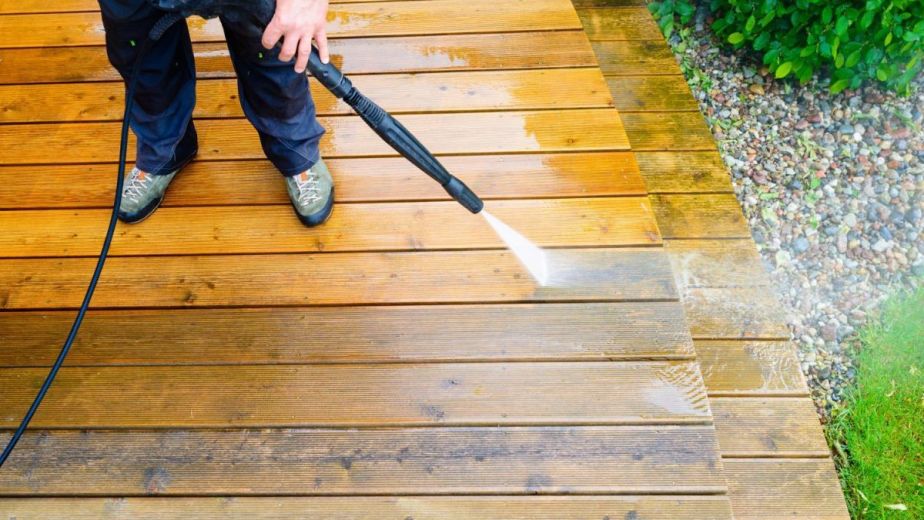

A fresh coat of stain can change the appearance of a wood fence. But before choosing a color or booking the work, look closely at the surface underneath.
Dirt, green buildup and remnants of an old finish can affect preparation. Moisture matters too, especially after washing.
Yes—before staining or sealing a wood fence, the surface should be clean and meet the coating manufacturer’s requirements for dryness and preparation. Depending on its condition, the fence may also need repairs, removal of an incompatible finish or sanding.
Cleaning is an important step, but a fence that looks cleaner is not automatically ready for coating.
Why Does Cleaning Matter Before Staining?
Stain and sealer manufacturers specify how the wood should be prepared before application. Existing dirt, surface growth or coatings can interfere with the result.
The requirements depend on the product. A penetrating stain needs suitable wood to absorb into, while a coating that forms a surface film has its own preparation and adhesion requirements.
For example, Ready Seal specifies clean, dry wood for its penetrating stain. BEHR’s fence-staining guidance includes preparation for existing finishes rather than treating every fence as bare wood. READY SEAL®
Choose the intended finish before finalizing the cleaning process. That allows the cleaner and the person applying the coating to work toward the same preparation standard.
Does Every Fence Need the Same Preparation?
No. Start with the material, condition and previous treatment.
This article focuses on wood fencing. Vinyl, metal and composite fencing should follow their own manufacturer’s care and coating instructions.
For wood fences, use the following distinctions when planning the work:
|
Fence condition |
What to establish before coating |
|
Bare wood with surface dirt |
Required cleaning method and drying conditions |
|
Green or dark buildup |
Suitable treatment for the deposit and wood |
|
Previously stained wood |
Compatibility with the proposed new finish |
|
Peeling or flaking coating |
Required removal and surface preparation |
|
New wood |
Product-specific preparation and moisture requirements |
|
Damaged boards or unstable sections |
Repairs needed before finishing |
An older fence may need several of these steps. A relatively clean fence may need less intensive preparation, but it still must meet the selected product’s instructions.
Inspect the Fence Before Booking Cleaning
Walk along both accessible sides and look at the boards, posts, rails and gate.
Identify loose boards, damaged sections, protruding fasteners and signs of deterioration. Arrange appropriate repairs before investing in a new finish.
Also collect any information you have about previous treatments:
- The stain or sealer brand.
- Whether the fence was painted.
- When it was last coated.
- Any cleaners or treatments recently applied.
- Whether different sections received different products.
Share that information when requesting fence cleaning. It helps the provider assess what cleaning can achieve and what may require additional preparation.
Do You Need to Remove the Old Stain?
Not always. It depends on the existing finish, its condition and the product you plan to apply.
A compatible maintenance coat may require a different process from changing to another coating system. Peeling areas or an incompatible finish may need removal.
Ask the coating manufacturer or applicator:
- Can the new product go over the existing finish?
- Does the whole surface need stripping, or only specific preparation?
- Is a cleaner, brightener or neutralizing step required?
- Is sanding needed?
- Should a test section be completed first?
Avoid assuming that washing will remove every old coating. Likewise, stripping the entire fence may be unnecessary if the selected product allows a simpler maintenance application.
Get the preparation requirements confirmed before approving the work.
Should You Pressure Wash a Wood Fence?
Pressure washing is not automatically required before staining.
The appropriate method depends on the wood, its condition and the finish manufacturer’s guidance. Ask the cleaner how the process will avoid damaging the surface and whether it may leave areas needing further preparation.
Before work begins, clarify:
- Which cleaning product will be used.
- Whether it is suitable for the wood and planned coating.
- How the method will be tested.
- Whether old finish removal is included.
- Who handles any sanding or surface correction afterward.
The objective is a suitable surface for finishing. A more aggressive cleaning method is not necessarily a better preparation method.
How Long Should You Wait After Cleaning?
There is no single waiting period that works for every fence and every coating.
Drying depends on the wood, shade, weather and how wet the fence became during cleaning. The selected product’s requirements should decide when application can begin.
For example, Ready Seal specifies wood moisture content of 12% or less and recommends using a moisture meter to check it. That threshold applies to Ready Seal; it should not be treated as a universal requirement for all stains and sealers. readyseal.com
Ask the applicator how dryness will be checked, especially in shaded sections or near the ground.
A surface that feels dry may not be sufficient evidence that the wood meets the product’s requirements.
For a Midlothian or Richmond project, leave flexibility between cleaning and staining rather than booking the second job solely around a fixed number of days.
Can You Clean and Stain on the Same Day?
Do not assume that you can.
Same-day application is appropriate only if the preparation is complete and the wood meets the selected coating’s conditions. After a substantial wash, that may not be possible.
Ask the contractor to explain the decision based on the product instructions and the condition of the wood—not simply the availability of the crew.
Rain can also affect the schedule. Sherwin-Williams advises planning fence staining around weather because rainfall can interfere with drying and application. Sherwin-Williams
If conditions are unsuitable, delaying the coating is preferable to rushing the agreed preparation.
Does a New Fence Need Cleaning Before Staining?
New wood should still be assessed and prepared according to the intended coating’s instructions.
Do not assume that newly installed boards are ready immediately, or that every new fence must weather for the same number of months.
Ask about:
- The wood species and treatment.
- Its current moisture condition.
- Surface dirt from storage or installation.
- The coating manufacturer’s instructions for new wood.
If only some boards have been replaced, discuss the possibility of a color difference between new and older sections. A test application can help set expectations before the full fence is coated.
How Should You Coordinate Cleaning and Staining?
If separate companies are doing the work, agree on the preparation standard before either starts.
The staining contractor should identify the product and its requirements. The cleaning provider should confirm which of those tasks are included in the quote.
A practical sequence is:
- Inspect:Identify damage and the previous finish.
- Choose the coating:Confirm compatibility and preparation requirements.
- Plan repairs:Resolve structural or damaged-board concerns.
- Clean and prepare:Complete the agreed treatment and any additional steps.
- Check readiness:Confirm dryness and surface condition.
- Test and apply:Review a sample area before completing the fence where appropriate.
For larger exterior projects, coordinate nearby washing as well. If you are arranging exterior house washing, discuss the order of work so later cleaning does not interfere with a newly applied fence finish.
What Should a Pre-Staining Cleaning Quote Include?
Tell the provider that the fence is being prepared for a coating. A general appearance-cleaning quote may not include everything the applicator requires.
Request a written scope covering:
- Fence length, height and accessible sides.
- Gates, posts and rails included.
- The cleaning process.
- Whether stripping or brightening is included.
- Protection of nearby plants and surfaces.
- Any excluded sanding or repairs.
- Expected limitations.
- Coordination with the coating contractor.
Make access arrangements clear, particularly where one side borders another property.
Also distinguish cleaning, staining and sealing as separate services unless the quote explicitly includes them. Do not assume the company cleaning the fence will apply the finish.
Frequently Asked Questions
Can I stain over green buildup?
Prepare and clean the affected surface according to the coating manufacturer’s instructions first. Applying stain over visible buildup skips an important part of preparation.
Is washing enough before sealing?
Sometimes, but not always. Existing finishes, damaged wood or rough areas may require additional work, and the surface must meet the sealer’s drying requirements.
Do I need both stain and sealer?
Some products combine both functions. Choose a suitable coating system and follow its instructions rather than layering separate products without checking compatibility.
Will cleaning make all fence boards the same color?
Not necessarily. Differences in age, wood, previous treatments and exposure can remain. Ask for realistic expectations and consider a test section before finishing.
How do I know the fence is ready to stain?
Confirm that repairs and preparation are complete, the surface meets the product’s cleanliness and moisture requirements, and the weather conditions are suitable for application.
Prepare the Fence Before Investing in a New Finish
A successful fence-finishing project starts with knowing what is on the wood and what the chosen coating requires.
Inspect first, agree on preparation and allow enough time for drying. This gives the cleaning provider and applicator a clear basis for the work.
Contact Curb Appeal Pressure Wash to discuss fence cleaning for your Midlothian or Richmond property. Share photos, any previous coating details and the product you plan to use, and request a cleaning scope that can be coordinated with your staining or sealing project.