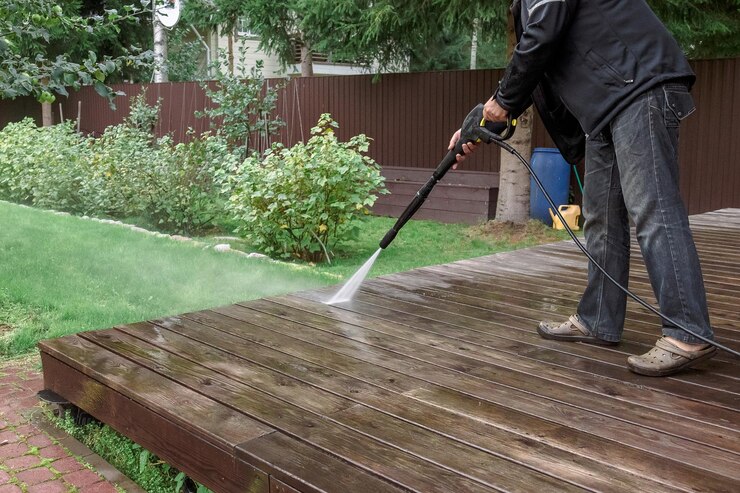

Yes, pressure washing can damage a wood deck if too much pressure is used or the cleaning technique is incorrect.
Wood is much softer than concrete, so aggressive pressure can raise the grain, splinter boards, create visible lines, strip finishes, and even gouge the surface.
For homeowners considering Deck Cleaning Richmond VA services or searching for deck power washing near me, the goal should not be maximum pressure. The goal should be safe, controlled cleaning based on the type and condition of the wood.
How Can Pressure Washing Damage a Wood Deck?
Pressure washing becomes risky when the equipment is used too aggressively.
Common problems include:
- Splintering
- Raised wood fibers
- Gouging
- Visible wand marks
- Stripped stain or sealer
- Uneven cleaning
- Damage to softer wood areas
These problems can make a deck look rougher after cleaning instead of better.
Why Is Wood More Sensitive Than Concrete?
Concrete is a hard, dense surface that can usually tolerate stronger pressure.
Wood is different.
It is:
- Softer
- More porous
- More vulnerable to surface damage
- More affected by age and weathering
That means a pressure setting that works well on a driveway may be far too aggressive for a deck.
What Happens if Too Much Pressure Is Used?
Excessive pressure can physically tear into the wood surface.
You may notice:
- Fuzzy wood fibers
- Rough boards
- Deep cleaning lines
- Uneven color
- Damaged stain
- Visible grooves
Once wood fibers are damaged, additional sanding or refinishing may be needed.
Can Pressure Washing Cause Splinters?
Yes.
High pressure can raise or tear the wood fibers.
This can leave the surface:
- Rough
- Fuzzy
- Splintered
- Uncomfortable to walk on barefoot
Older or weathered decks may be especially vulnerable.
Can Pressure Washing Remove Deck Stain?
Yes.
Strong pressure can partially or completely remove existing stain or sealer.
This can leave the deck looking:
- Patchy
- Uneven
- Faded in some areas
- Bare in others
If you are planning to remove an old coating intentionally, that is a different project from normal deck cleaning.
Can Pressure Washing Gouge Wood?
Yes.
Holding the nozzle too close to the deck can cut visible grooves into the surface.
Gouging is more likely when:
- Pressure is too high
- The nozzle is too narrow
- The wand is held too close
- The operator pauses in one spot
Proper technique is essential.
Can Pressure Washing Leave Lines on a Deck?
Yes.
Visible lines or stripes often happen when the wand is moved inconsistently.
This can create:
- Light and dark bands
- Uneven cleaning
- Over-cleaned sections
- Surface marks
Professional deck cleaning in Richmond, VA should produce a consistent appearance without obvious cleaning patterns.
Is Pressure Washing Ever Safe for a Wood Deck?
Yes.
Pressure washing can be safe when:
- Pressure is properly controlled
- The correct nozzle is used
- The wand is kept at an appropriate distance
- The deck is inspected first
- The method is adjusted for the wood
The key is control.
Using more pressure does not mean better cleaning.
What Is the Safest Way to Clean a Wood Deck?
For many decks, a safer method involves:
- Inspecting the surface
- Applying an appropriate cleaning solution
- Allowing the solution to loosen buildup
- Using controlled low pressure
- Rinsing evenly
This reduces the need to rely on water force alone.
Is Soft Washing Better for Wood Decks?
In many cases, soft washing or low-pressure cleaning can be safer than aggressive pressure washing.
Soft washing uses cleaning solutions to help break down:
- Green algae
- Mildew
- Dirt
- Organic buildup
This allows the deck to be cleaned using less pressure.
Does Every Wood Deck Need the Same Cleaning Method?
No.
The right method depends on:
- Wood species
- Deck age
- Surface condition
- Existing stain
- Existing sealer
- Amount of buildup
- Previous damage
A newer deck may respond differently than an older, weathered deck.
Are Older Decks More Likely to Be Damaged?
Yes.
Older decks may have:
- Softer wood
- Existing splinters
- Loose boards
- Cracks
- Worn coatings
- Weathered fibers
These conditions can increase the risk of pressure-related damage.
What About Pressure-Treated Wood?
Pressure-treated wood can still be damaged by excessive pressure.
Even though the lumber is designed for outdoor use, the surface fibers are not immune to:
- Splintering
- Gouging
- Raised grain
- Finish damage
Controlled cleaning is still important.
Can Cedar Decks Be Pressure Washed?
Cedar is relatively soft compared with many other materials.
It requires extra care.
Too much pressure can quickly create:
- Surface marks
- Raised grain
- Gouging
- Uneven appearance
Lower-pressure cleaning is often a safer choice.
What About Composite Decking?
Composite decking is different from natural wood, but high pressure can still create problems.
Potential risks include:
- Surface damage
- Finish marks
- Uneven appearance
Manufacturer cleaning recommendations should always be considered.
Can Pressure Washing Damage Deck Railings?
Yes.
Railings can be even more vulnerable because they often have:
- Narrow pieces
- Decorative details
- Corners
- Older finishes
Aggressive pressure may damage these areas faster than broad deck boards.
Can Pressure Washing Damage Deck Stairs?
Yes.
Stairs may experience:
- More wear
- Moisture buildup
- Algae
- Heavy foot traffic
They should be cleaned carefully, especially around edges and corners.
Why Deck Power Washing Near Me Should Not Mean High Pressure
When homeowners search for deck power washing near me, they may assume the strongest machine will provide the best result.
That is not necessarily true.
A professional provider should evaluate:
- Deck material
- Existing finish
- Age
- Algae
- Mildew
- Surface condition
before choosing a cleaning method.
The most powerful setting is rarely the best setting for wood.
Can Pressure Washing Remove Green Algae from a Deck?
Yes, but pressure alone is not always the best approach.
Green algae commonly develops in areas with:
- Shade
- Moisture
- Tree coverage
- Limited sunlight
Using an appropriate cleaning solution can help loosen the algae so less water pressure is required.
Can Pressure Washing Remove Mildew?
It may remove visible buildup, but cleaning solutions can help treat organic contamination more effectively.
For mildew, a surface-appropriate cleaning process may be better than simply increasing water pressure.
Can Pressure Washing Remove Black Stains?
Sometimes, depending on the cause.
Black or dark stains may come from:
- Mildew
- Dirt
- Organic debris
- Weathering
- Old finishes
The stain should be evaluated before cleaning.
Using excessive pressure on an unidentified stain may damage the deck without fully solving the problem.
Should You Pressure Wash Before Staining a Deck?
Cleaning before staining is often useful, but it must be done properly.
Before staining, the deck should generally be free from:
- Dirt
- Algae
- Mildew
- Organic debris
- Surface grime
After cleaning, the deck should be allowed to dry adequately before stain is applied.
Can Over-Washing Make Staining More Difficult?
Yes.
If aggressive pressure raises the wood grain or causes splintering, additional preparation may be required before staining.
This may include:
- Sanding
- Surface smoothing
- Additional drying time
Gentler cleaning can reduce unnecessary surface damage.
How Often Should a Wood Deck Be Cleaned?
For many Richmond homeowners, cleaning every 12 to 18 months is a practical starting point.
Some decks may need cleaning sooner if they have:
- Heavy shade
- Tree coverage
- Moisture
- Recurring algae
- Mildew
- Heavy use
The condition of the deck should guide the schedule.
What Are the Signs a Deck Needs Cleaning?
Look for:
- Green algae
- Mildew
- Dark stains
- Slippery boards
- Heavy pollen
- Dirt buildup
- Dull appearance
These are better indicators than cleaning according to a fixed calendar alone.
How Can You Avoid Pressure Washing Damage?
A safer approach includes:
- Inspecting the deck first
- Using appropriate pressure
- Choosing the correct nozzle
- Keeping proper distance
- Moving the wand consistently
- Using cleaning solutions where appropriate
- Testing a small area first
These steps can help reduce the risk of surface damage.
Should You Hire a Professional for Deck Cleaning?
For larger, older, stained, or heavily soiled decks, professional cleaning can reduce the risk of damage.
A professional should know how to adjust the process for:
- Wood
- Composite decking
- Existing stain
- Railings
- Stairs
- Heavy algae
- Mildew
Professional Deck Cleaning in Richmond, VA
Pressure washing can damage a wood deck when too much pressure is used, but the right technique can clean the surface safely.
Curb Appeal Pressure Wash provides professional Deck Cleaning Richmond VA services for residential properties.
Services may include:
- Wood deck cleaning
- Composite deck cleaning
- Algae removal
- Mildew cleaning
- Fence cleaning
- House washing
- Driveway cleaning
- Walkway cleaning
If your deck has green algae, mildew, dirt, or dark staining, professional deck cleaning in Richmond, VA can help restore a cleaner appearance using a method appropriate for the material.
If you are searching for deck power washing near me, choose a provider that prioritizes controlled cleaning over excessive pressure.
FAQs
Can pressure washing damage a wood deck?
Yes. Excessive pressure can splinter wood, raise fibers, gouge boards, strip finishes, and leave visible cleaning marks.
Is pressure washing safe for wood decks?
It can be when the correct pressure, nozzle, distance, and technique are used.
Is soft washing safer for wood decks?
In many cases, lower-pressure cleaning with an appropriate cleaning solution can reduce the risk of damage.
Can pressure washing remove deck stain?
Yes. High pressure can strip or unevenly remove stain and sealer.
Can pressure washing make a deck splinter?
Yes. Aggressive pressure can raise and damage wood fibers, creating a rough or splintered surface.
How often should a Richmond deck be professionally cleaned?
Many decks can start with cleaning every 12 to 18 months, while shaded or moisture-prone decks may need service sooner.